

Description
MAXLINE 100 - Potable Water Coating
Potable water tank coating — safe, long-lasting protection for drinking water tanks
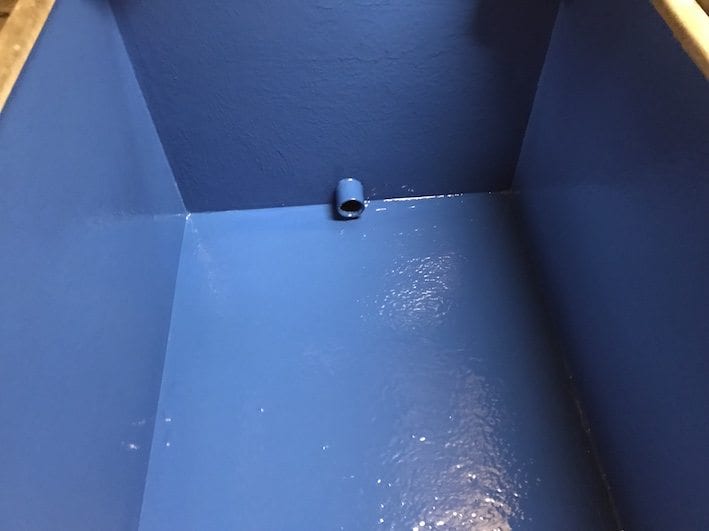
Keeping drinking water clean starts with the right internal coating. Maxkote’s Maxline potable water coating is a proven, UK-ready solution for protecting potable water tanks, narrowboat water tanks, and fiberglass reservoirs. It’s a certified potable water tank epoxy and sealant that meets the demands of refurbishment and new-build applications.
Why choose a certified potable water tank paint?
- Safety for drinking water: Only coatings formulated and tested for drinking water contact should be used — Maxline potable water coating is designed to be a paint safe for drinking water.
- Durability: A high-quality potable water tank epoxy provides long-term resistance to corrosion, chemical attack and abrasion, reducing maintenance frequency.
- Versatility: Useable on steel, concrete and fiberglass potable water tanks, and in confined spaces such as narrowboat water tank systems.
- Ease of refurbishment: Potable water tanks refurbishment with the right coating extends service life without full replacement.
Key features of Maxline potable water coating
- Certified for drinking water contact: Formulated to comply with UK standards for materials in contact with drinking water; WRAS approved lining available.
- Potable water tank epoxy performance: Delivers a robust, impermeable barrier that prevents rust and contamination.
- Suitable for narrowboat water tanks: Available as a narrowboat water tank paint option — excellent adhesion and low-odour application properties for small spaces.
- Fiberglass compatibility: Fiberglass potable water tank coating application instructions and surface prep ensure reliable bonding.
- Flexible lining option: Supports flexible lining for water tanks where slight movement or thermal variation occurs.
- Fast-curing and easy to apply: Minimises downtime during potable water tanks refurbishment projects.
Typical applications
- Domestic and commercial potable water tanks
- Narrowboat and marine water tanks
- Fiberglass and steel reservoirs
- Water storage refurbishment and new installations (drinking water tank relining)
Surface preparation and application (recommended approach)
- Empty and clean: Drain tank, remove sludge, and wash with approved cleaning agents.
- Mechanical preparation: Abrade or blast-abrade steel to appropriate Sa standards; abrade fiberglass to remove surface contaminants.
- Degrease and dry: Ensure substrate is dry and free from oils or residues.
- Prime if required: Apply manufacturer-recommended primer for metal or fiberglass when specified.
- Apply Maxline potable water coating: Follow specified wet-film thickness and application method (brush, roller, or spray). Multiple coats may be required for target film thickness.
- Cure and test: Allow full cure per datasheet, then flush and perform a potable-water-safe rinse before returning to service.
Benefits for owners and operators
- Reduced risk of contamination — a certified potable water tank sealant protects stored drinking water.
- Lower lifecycle cost — refurbishment with a high-performance potable water tank paint UK customers rely on is more economical than replacement.
- Regulatory compliance — using coatings rated for drinking water contact helps meet health and safety requirements.
- Flexibility — coatings tailored for fiberglass, steel, or narrowboat tanks, including flexible lining for water tanks applications.
Choosing the right product
When selecting a potable water tank epoxy or sealant:
- Confirm drinking-water contact certification and test reports (WRAS approved lining where required).
- Verify compatibility with substrate (fiberglass, steel, concrete).
- Check curing time, VOCs, and suitability for confined-space application (important for narrowboats).
- Ensure the supplier offers technical guidance for potable water tanks refurbishment and drinking water tank relining.
Short checklist for a successful potable water tank coating job
- Cleanliness and dryness of substrate
- Appropriate mechanical preparation for adhesion
- Use of a certified potable water tank paint or epoxy (e.g., Maxline potable water coating)
- Correct film thickness and full cure before returning tank to service
- Post-coating potable-water-safe flush and test
Product tags: Drinking water tank relining | Flexible lining for water tanks | Potable water tank lining | Water tank paint | WRAS approved Lining
For reliable potable water tank paint in the UK, Maxline potable water coating from Maxkote offers a purpose-built, certified solution for drinking water systems — from narrowboat water tanks to large fiberglass reservoirs.

Typical Uses
- Drinking Water Tank Internal Coating
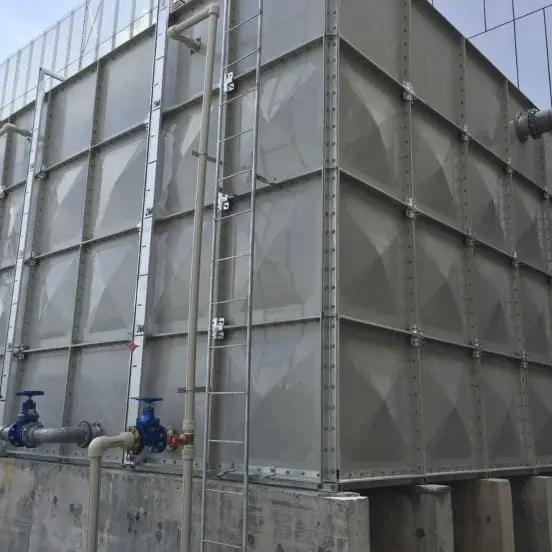
- Lining for GRP Water Tanks
- Lining for Sectional Steel Tanks
- Used as a lining for Galvanised Steel Water Tanks
- Coating for Concrete Water Tanks & Reservoirs
- Lining for Braithwaite Tanks
- As an internal Lining for Pipelines
- Corrosion protection for Cooling Towers
- As a Lining for Potable Water Pumps
Application Guide
- All oil and grease must be removed from the surface using an appropriate cleaner such MEK or similar type solvent.
- All surfaces must be abrasive blasted to ISO 8501/4 Standard SA2.5 (SSPC SP10/ NACE 2) minimum blast profile of 75 microns using an angular.
- Once blast cleaned, the surface must be degreased and cleaned using MEK or similar type solvent.
- All surfaces must be coated before gingering or oxidation.
- All oil and grease must be removed from the surface using an appropriate cleaner such as MEK.
- All surfaces must be mechanically abraded using handheld grinders to ISO 8501/4 ST3 (SSPC SP3 ST3).
- Once abraded, the surface must be degreased and cleaned using MEK or similar type material.
- All surfaces must be repaired before gingering or oxidation occurs.
Prior to mixing please ensure the following:
- The base component is at a temperature between 15-25°C.
- Do not apply the material when the ambient or substrate temperature is below 10°C or less than 3°C above dew point.
- Transfer the contents of the Activator unit into the Base container.
- Using a slow speed electric paddle mixer, mix the 2 components together until the material is streak free.
- Once mixing is complete, use the mixed coating as soon possible after mixing.
Use all mixed material within 15 minutes at 20°C.
- Pour the mixed material into a paint kettle or paint tray (this will maximise the usable life)
- Using a 50mm synthetic brush, stripe coat all edges, joints & corners.
- Once the stripe coat has cured sufficiently and is capable of being overcoated, apply the basecoat to all surfaces at minimum 400 microns.
- Once the basecoat of material has cured sufficiently, approximately 6-8 hours at 20°C, apply the topcoat to all surfaces at a minimum 400 microns.
Minimum finished coating thickness needs to be in excess of 800 microns.
| Appearance | Base Activator Mixed | Blue or light grey thixotropic liquid Amber liquid Blue or light grey Thixotropic liquid |
| Mixing Ratio | By Weight By Volume | 3.25:1 3:1 |
| Density | Base Activator Mixed | 1.31 1.22 1.29 |
| Solids Content | 100% | |
| Sag Resistance | Nil at: 400microns | |
| Usable Life | 10°C 20°C 30°C | 25-35 minutes 15-20 minutes 8-10 minutes |
| Coverage 2 x 350microns | The material should be applied at a minimum wet film thickness of 350 microns per coat. | 2.85 sqm/ ltr |
| Cure Times | Movement without load or immersion: Light loading: Full loading/water immersion: Chemical Contact: | 2 hours 8 hours 3 days 14 days |
| Storage Life | Unopened and stored in dry conditions (15-30°C) | 2 years |
| Adhesion | Tensile Shear to ASTM D1002 on abrasive blasted mild steel with 75 micron profile | 169kg/cm² 2400psi |
| Corrosion Resistance | Tested to ASTM B117 | 5000 hours |
| Flexibility | (British Gas FW0028 Draft method) 3% Strain at 20°C 3% Strain at 5°C 3% Strain at 0°C ASTM D522 | Pass Pass Pass Pass |
| Hardness | Shore D to ASTM D2240 | 80 |
| Impact Resistance | (British Gas CW6) 15 Joules (BS EN 10290) | 23°C 8.6 Joules 5°C 6.1 Joules |
| Adhesion – Resistance to Removal | (BS EN 10290) | 23°C rating 1 60°C rating 2 |
| Adhesion – Pull Off Test | (BS EN 10290) | 23°C 175kg/ cm² 60°C 73kg/ cm² (ASTM D4541) 214kg/ cm² |
| Electrical Insulation Resistance | (BS EN 10290) | 8.4 X 10⁹ |
| Indentation Resistance | (BS EN 10290) | 23°C 0.1mm 60°C approx. 15% |
| Flexibility | (BS EN 10290) | Pass |
| Elongation | (BS EN 10290) | 14.5% |
| Abrasion Resistance | (ASTM D4060) | 90mgm weight loss per 1000 cycles 1kg load – CS17 wheel |
| Heat Resistance | Suitable for use in immersed conditions at temperatures up to: Suitable for use in dry conditions at temperatures up to dependant on load: | 70°C 120°C |
| Chemical Resistance | At 20°C product resists attack by a wide variety of inorganic acids, alkalis, salts and organic media | Acetic Acid 10% Benzoic Acid 15% Caster Oil Cyclohexane Ethyl Alcohol 50% Formic Acid 10% Fuel Oil Glycerine Hydrochloric Acid 20% Isopropanol Lactic Acid 20% Mineral Oil Nitric Acid 10% Phosphoric Acid 50% Potassium Hydroxide 10% Sodium Carbonate 10% Sodium Hydroxide 10% Sulphuric Acid 50% White Spirit |